Coventry City risk EXPULSION from the Football League unless they can provide details on where they will play home games next season amid ongoing stadium uncertainty
The EFL have written to Coventry asking for an update on their stadium situation
Coventry may face expulsion unless they confirm their home ground by March 5
They currently play at the Ricoh Arena, owned by Wasps Rugby Football Club
The League One side’s rent deal expires in May and Wasps won’t renegotiate until ongoing legal action regarding the sale of the stadium comes to a close
Coventry have been warned they face expulsion from the Football League if they cannot provide information about where they will play their home games next season.
The EFL board has written to the Sky Bet League One club asking for an update by March 5 on where they intend to be based for the 2019-20 campaign.
The Sky Blues are currently playing at the Ricoh Arena, which is owned by Wasps Rugby Football Club, but the existing rent deal runs out in May.
The EFL have written to Coventry City asking for an update on their stadium situation
Wasps are refusing to enter discussions over a new agreement until ongoing legal action regarding the sale of the stadium comes to a close.
If Coventry cannot provide the EFL with more information an Extraordinary General Meeting will be held on April 25 where EFL clubs will consider throwing them out of the league.
The Sky Blues, who are chasing a play-off spot in League One, have called on Wasps to come to an agreement before the deadline.
They said in a club statement: ‘Coventry have until Tuesday, March 5 2019 to provide a further update to the EFL board.
The Sky Blues currently play at the Ricoh Arena but their existing rent deal runs out in May
‘Should a satisfactory solution not be found over the next two months, an Extraordinary General Meeting of EFL clubs will be convened to consider Coventry’s expulsion from the English Football League.
‘This meeting would be held on Thursday, April 25 – this is to provide clarity regarding Coventry’s future membership in advance of relegation and promotion issues being resolved during the run-in to the end of the season.
‘These dates show how stark the situation facing the football club now is and that time is running out.
‘Our only option is to continue to play at our home, the Ricoh Arena.
‘Coventry City Football Club wants to do a deal with Wasps Rugby Club as soon as possible, to resolve this impasse so that the dates above are not encountered.
Coventry have urged Wasps to enter talks amid their uncertainty but the rugby club will not do so until an ongoing legal dispute regarding the sale of the stadium comes to a close
‘All parties now need to work together for good of Coventry City Football Club, its supporters, the Ricoh Arena, the City of Coventry and our community – the continued future of the football club needs to be everyone’s focus to prevent more heartache and worry.’
EFL chief executive Shaun Harvey said: ‘The matter of Coventry’s efforts to secure a home venue for 2019-20 season and beyond has been a serious concern for all parties for a significant period of time and the objective of the EFL, as it has always been, is to secure an appropriate solution for the long-term future of the club as they are a much valued member of our competition.
‘The course of action taken this week is with reluctance, but the league has to ensure the integrity of our competitions is maintained and all clubs meet the obligations that come with being a member of the EFL.
‘We remain in regular dialogue with the club and will provide all practical available assistance in line with EFL regulations.’
En 2015, un accord de paix était signé à Alger entre les autorités maliennes et les mouvements rebelles, fêté à Bamako le 15 mai 2015. HABIBOU KOUYATE / AFP
C’est dans un pays menacé par l’instabilité que le premier ministre français, Edouard Philippe, arrive vendredi 22 février pour une visite de deux jours accompagné de la ministre des armées, Florence Parly, et du chef de la diplomatie française, Jean-Yves Le Drian. Car, au Mali, le bilan de l’accord de paix reste maigre. Seul un quart des engagements pris il y a trois ans et demi sont totalement mis en œuvre… C’était en 2015, au moment de la signature de l’accord d’Alger, conclu pour mettre fin au conflit du nord du Mali. L’Etat et les anciens groupes rebelles qui revendiquaient alors l’indépendance d’une partie du pays s’étaient engagés à préserver l’unité du Mali à condition que 78 points sur lesquels ils s’étaient entendus avec l’Etat soient respectés. Le rapport publié vendredi par le Centre Carter, l’observateur indépendant de l’accord, révèle que seules 20 de ces clauses ont été intégralement respectées.
Pis, le Center Carter précise que « la plupart des progrès réalisés ont eu lieu avant 2018 et concernent principalement la mise en place de mesures préalables qui ne constituent pas une fin en soi ». La mise en place d’un nouveau cadre politico-institutionnel et d’une réforme du système de sécurité, centrales dans le dispositif, est loin d’être achevée (respectivement, 6 % et 24 %). Le « faible engagement du gouvernement et des mouvements signataires » et la « tactique souvent dilatoire des mouvements » sont les causes du blocage.
2019, année charnière
La stabilité politique et sécuritaire du Mali dépend pourtant largement de la mise en œuvre de ces deux piliers qui reprennent certaines des revendications formulées par les ex-rebelles, telle que l’obtention de plus de pouvoir dans la gouvernance et le développement des régions du nord. Tout n’est pas pour autant perdu puisque l’année 2019 pourrait faire figure d’année charnière. La réforme de la décentralisation, consacrée en 2012 par le vote d’une loi qui a quasiment doublé le nombre de régions, devrait enfin être menée sur le terrain.
Le hic, c’est que, depuis des mois, le texte est sujet à de sérieuses critiques. « Avec la création des nouvelles régions, on constate en effet que 80 % de la superficie est attribuée à moins de 10 % de la population. C’est démocratiquement un véritable scandale. Imaginez les conséquences sur la prise de décision à l’avenir ! », s’offusque Mahamadou Diouara, du cabinet Gaaya, spécialiste des questions sécuritaires. Aussi, une partie des mouvements signataires et des communautés du nord qui s’estiment lésées par ce redécoupage ont-elles d’ores et déjà annoncé vouloir boycotter ce processus.
Et comme l’explique Ibrahim Maïga, chercheur à l’Institut d’études de sécurité (ISS) de Bamako (ISS), les modalités de cette régionalisation expliquent en grande partie le blocage de l’accord d’Alger : « Certains des mouvements armés signataires conditionnent les progrès sur le plan sécuritaire aux avancées qu’ils veulent au préalable obtenir sur le plan institutionnel. »« Aujourd’hui, les gens ont l’impression que les groupes armés, qui n’ont pour légitimité que d’avoir pris les armes, sont en train de se tailler une part politique et administrative, complète Ousmane Sy, ancien ministre de la décentralisation. Cela encourage l’armement de nouveaux groupes. »
Un désarmement incertain
Fin 2018, un processus de désarmement des anciens combattants, point de départ vers une refonte de l’armée, a été engagé. Mais le rapport du Centre Carter évoque des « retards considérables » dans sa mise en œuvre. L’enregistrement des 36 900 anciens combattants maliens est terminé. Mais d’aucuns craignent que cette liste ne soit gonflée. « Il y a des gens qui essaient de profiter des avantages du DDR [désarmement, démobilisation et réintégration]. En réalité, il y a moins de 16 000 personnes réellement armées », assurait un officiel malien au Monde Afrique, en novembre 2018. Depuis, les points d’interrogation se multiplient quant au succès de l’opération. D’autant que, dans le centre du Mali, un autre processus de désarmement a été amorcé : 5 000 combattants s’y seraient aujourd’hui inscrits.
Paradoxalement, les conflits armés, djihadistes comme intercommunautaires, se poursuivent, au nord et au centre. Entre le 1er janvier et le 16 février, la Mission des Nations unies au Mali (Minusma) dit avoir documenté sept incidents, ayant entraîné la mort d’au moins 49 civils, dans le centre. Au nord, l’attaque terroriste du camp onusien d’Aguel’Hoc, le 20 janvier, rappelle la capacité de nuisance des groupes djihadistes. Avec dix casques bleus tués, cet assaut est le plus meurtrier jamais connu par la Minusma, implantée au Mali depuis 2013.
Doubles jeux
Aux Nations unies, des suspicions de complicité avec les commanditaires de cette attaque se font jour. « Parmi ceux qui nous combattent, ceux qui commettent ces forfaitures, il y a aussi des gens qui sont parmi nous, qui observent nos faits et gestes. Il est temps d’interroger notre capacité d’anticipation. Il est également temps de revisiter notre collaboration et coopération avec les mouvements signataires de l’Accord qui sont pourtant présents dans ces régions du nord », avait déclaré Mohamed Saleh Annadif, le représentant spécial de l’ONU au Mali, lors de la cérémonie d’hommage aux dix soldats tombés.
Trois signataires de l’accord de paix ont par ailleurs été pour la première fois sanctionnés par le Conseil de sécurité des Nations unies, en décembre 2018. Ils ont été accusés d’entrave à l’accord de part leurs liens avec des entreprises terroristes. A Bamako, cette annonce n’a pas surpris grand monde. Ce double jeu était en coulisse dénoncé depuis des mois par nombre d’observateurs maliens. « Tout le monde se fourvoie avec cet accord. Depuis qu’il a été signé, les gens n’en cherchent que les retombées. Chacun a les yeux rivés sur les dividendes de la paix sans réellement chercher à appliquer le texte », estime Ousmane Sy.
Quant aux populations et aux internationaux, ils ne sont pas non plus dupes, comme le souligne le rapport du Centre Carter : « Certains membres la société civile et de la communauté internationale nous ont raconté leur exaspération face à la lenteur de la mise en œuvre et à la perception – erronée – des représentants maliens que le processus est une fin en soi et que le financement international continuerait indéfiniment. »
Front social agité
En 2019, les parties maliennes se sont pourtant engagées à réaliser l’essentiel des dispositions de l’Accord. Une des plus importantes, au cœur du volet politique et institutionnel, a été annoncée par le gouvernement. La révision de la Constitution est attendue au printemps. La nouvelle loi fondamentale malienne, qui sera soumise à référendum, devrait consacrer la création d’un Sénat, censé permettre aux communautés du nord d’être mieux représentées. Mais, là encore, le gouvernement n’aura pas la tâche facile. En 2017, lors d’une première tentative de révision, il avait été contraint de reculer face à des manifestations de milliers de Maliens.
Deux ans plus tard, une partie de l’opposition reste contre. Quant au front social, il est agité depuis des mois. Magistrats, enseignants, cheminots et syndicats de travailleurs ont multiplié les grèves, n’excluant pas de les renouveler cette année. Dans ce contexte social instable, des doutes émergent sur la faisabilité de la révision constitutionnelle. « Elle est aujourd’hui la condition sine qua non pour la réussite de l’accord », insiste pourtant le Centre Carter. « C’est le serpent qui se mord la queue, glisse une source diplomatique. On frôle le blocage institutionnel. C’est un vrai bazar, personne n’y comprend plus rien. Ni nous, ni même l’Etat. »
135 kg d’héroïne avaient été saisis dans des compresseurs à bord du MSC Ivana.
«Les dispositions de la loi ont été strictement suivies par l’Exhibit Officer.» Le cabinet a pris note, ce vendredi 22 février, des conclusions du Fact-Finding Committee mis sur pied dans le sillage de la disparition de 16 kg d’héroïne sur les 135 kg retrouvés dans le port, en mars 2017.
«The provisions of section 58 of the Dangerous Drugs Act 2000 and Part VIII of the Police Standing Orders No. 138 have been scrupulously complied with by the designated Exhibit Officer”, note le rapport. De plus, la traçabilité a été assurée au niveau de l’Anti-Drug and Smuggling Unit (ADSU), au vu des documents produits tel l’Exhibit Register Book.
Le comité est d’avis que la différence de poids avec celle obtenue par l’ADSU, le 9 mars 2017, peut être mise sur compte de l’utilisation d’une balance de poche, dont la précision peut dépendre de la façon dont elle a été calibrée.
De plus, le comité est satisfait de la manière dont les pièces à conviction ont été sécurisées quand elles ont transité du terminal portuaire au quartier général de l’ADSU ainsi que la manière dont elles ont été scellées, conservées, transportées au Forensic Science Laboratory. Il n’y a eu aucune disparition d’héroïne.
En conséquent, le Fact-Finding Committee a recommandé une série de mesures pour éviter de telles incompréhensions à l’avenir. Le ministère de la Défense devra faire un suivi avec les partenaires concernés pour mettre ces recommandations en œuvre.
Ce Fact-Finding Committee était presidé par l’ex-juge Paul Lam Shang Leen.
Les anomalies constatées sur le poids de la drogue ont été attribuées tout simplement à l’utilisation d’une balance manuelle lors de l’exercice de peser. C’est ce que révèle ainsi le Fact Finding Commitee institué pour faire toute la lumière sur le volet de cette affaire qui a défrayé la chronique à l’époque.
Explications satisfaisantes pour l’ex-juge Paul Lam Shang Leen
Dans son rapport, l’ex-juge, Paul Lam Shang Leen, a mis en avant que les explications fournies par les parties concernées dans cette affaire ont été jugées pleinement « satisfaisantes ».
Il ajoute également que les officiers de la brigade antidrogue ont respecté les procédures à la lettre.
Le rapport a été examiné par le Conseil des ministres ce vendredi 22 février 2019.
There are issues in a classroom which a teacher can solve. And there are those he can’t. If a student isn’t submitting his homework regularly, it’s always possible for the teacher to have a word with him and find out the reason behind it. He can simplify the homework, or give him some more attention during his free time. However, personality issues are another matter. Take the example of a student prone to anxiety, anger, nervousness or moodiness. Simple things put him on the edge. He can be verbally brutal. His body language may suggest that he can get physically out of control at any moment. This is a delicate and complex situation. The teacher may not have been trained to deal with it. A counsellor would be an ideal person to do so.
Colleges need to have the services of professional counsellors today. We have new problems cropping up and not every teacher, however good he is academically, can effectively address them. The teacher has to cover a syllabus within a specific time span, plan his lessons meticulously, make corrections, organise activities within the college as well as outside, prepare question papers, and supervise examinations. Hence, he may not have adequate time to give to students facing difficult psychological or emotional issues.
The teacher may not know what solutions would be appropriate for turbulent students. He may wish to help but it might be general in nature. The student’s problems may be deep and only a skilled counsellor can do the needful.
A student may be depressed because of problems at home. He may not wish to open himself up to a teacher out of embarrassment or shyness. He may not like to share for fear that the teacher might tell it to others. He will feel uncomfortable if he reveals the real situation prevailing at home. However, with a counsellor, it may be different, for he knows how to get the student’s trust.
A teacher may be associated with the idea of punishment, a counsellor may not. The latter is adequately equipped to listen in all confidentiality. He may be able to work with the student over time and to penetrate his thoughts. He may have to meet the parents. Teachers are trained to teach and the training they get in psychology, sociology and other such relevant topics may be far from extensive. A superficial knowledge may not be enough to tackle a student who constantly bullies others or who has made it a habit to lie or steal, or who imposes himself on others. There may also be the student who is disturbingly uncommunicative. Another one may suffer from a strong sense of self-pity because he is not performing well. These are characteristics relating to personality development and hence had better be left to the professional. He is more apt to advise and guide.
Understanding the young
Some parents aren’t willing to listen to anything against their kids. Tell them that their children often use foul language in class and they deny it. Tell them their children are addicted to their phones during lessons and they feel offended. They personalize it and think that you’re hitting at them. The teacher is at a loss what to do. Other parents are aggressive and threaten to assault the teacher. Meanwhile, the problem stagnates. A counsellor might not have to face this type of antagonism, which makes his work easier.
An educator may be experienced but may not necessarily have an insight into the rough moments in a student’s life. A counsellor may possess this quality. A lot goes on inside an adolescent’s life. One needs a profound understanding of the psychology of human behaviour to help those struggling with their conflicts. Some students are sensitive. They are overly oppressed by frustrations and failures. This has a negative impact on them and on their academic performance. The counsellor may be the right person to help them readjust.
Photo illustration
However much some people may deny it, the truth remains that synthetic drugs are very much present on our school premises. If we have many students who behave themselves correctly, the fact is that we do have a number of agitated students. In some colleges, the situation may be more pronounced, in some it may be less. But where there are students, problems are bound to occur. We need professionals to delve into the problems with which students come to school.
The young tend to think that consuming drugs will help them relieve tension or offset stress. They’re concerned about the short-term effects not the long-term adverse effects. Drugs affect physiological as well as cognitive functions. The drug-user needs the support of his family. The counsellor is better placed than the teacher not only to get the family to play a significant part in combating drugs but also to explain and clarify what it means to the drug-user to fall into the criminal subculture. Or what it means to endanger his health and career.
Recently we had the case of some students clashing with the police in public. Students need to learn how to manage their emotions. This is why we need counsellors or psychologists.
L’administration nationale souhaite récupérer plusieurs milliards de dollars d’arriérés d’impôts auprès des compagnies pétrolières étrangères installées sur son territoire. Une réclamation qui s’inscrit dans une vaste campagne de recouvrement lancée par l’État, à la veille des élections présidentielles et législatives.
Abudja, réclame entre 2,5 et 5 milliards de dollars d’arriérés d’impôts à Royal Dutch Shell, Chevron, ExxonMobil, Eni, Total et Equinor. Les entreprises ont été averties au cours de l’année écoulée, par un courrier du service de recouvrement de la compagnie pétrolière nationale, la Nigerian National Petroleum Corporation.
Au total, l’opération doit permettre aux autorités de récupérer près de 20 milliards de dollars auprès compagnies visées. Deux d’entre-elles viennent de rendre l’affaire publique, ce qui soulève des soupçons d’instrumentalisation politique de la part du pouvoir, à la veille des élections présidentielles et législatives prévu le 23 février.
« Plusieurs opérateurs ont reçu des réclamations similaires, en liens avec une affaire entre les autorités nationales et locales du pays », a affirmé un porte-parole du groupe norvégien Equinor, selon lequel cette réclamation « n’a aucun mérite ». De son côté, ExxonMobil « est actuellement en train de plancher sur la question », a commenté un porte-parole du géant américain.
« Une dispute interne » des autorités nigérianes
De leur côté, les autorités nigérianes ont refusé de s’exprimer sur cette affaire. Mais d’après certaines sources gouvernementales et industrielles contactées par Reuters, l’argument du redressement fiscal ne serait en fait qu’un prétexte pour mobiliser des fonds qui doivent être reversés aux États locaux, pour faire preuve d’une meilleur redistribution des revenus issus de la manne pétrolière.
« Cela ressemble à une dispute interne entre l’administration fédérale et les gouvernements locaux. Le gouvernement central essaie simplement de transférer ses dettes aux compagnies pétrolières », affirme une autre source industrielle.
Un campagne nationale de recouvrement d’impôts
Au-delà des compagnies pétrolières étrangères, les autorités nigérianes sont en pleine campagne de recouvrement fiscal menée par l’organisme public de recouvrement, le Federal Inland Revenue Service (FIRS).
En 2018, selon l’agence de presse nigérienne NAN, la FIRS a identifié et obtenue le recouvrement d’impôts de près de 40 000 entreprises évadées fiscales en 2018, pour un total de 6,4 milliards de dollars (dont 46 % issus d’entreprises liés à l’industrie pétrolières). En continuité de cette campagne, le FIRS envisage pour 2019 de régulariser la situation de 45 000 fraudeurs identifiés.
Lifeline for Michy Batshuayi, enforced stay for Eden Hazard and first-team chances for Callum Hudson-Odoi and Ruben Loftus-Cheek: How Chelsea could lineup in 2019-20 after two transfer window ban
Chelsea have been banned from registering new players for next two windows
Transfer ban will have significant repercussions on Chelsea’s squad-building
Eden Hazard could be forced to stay despite persistent interest from Real Madrid
A number of loan players could return from Michy Batshuayi to Kurt Zouma
Chelsea were plunged into chaos on Friday when they were handed a two transfer window ban by FIFA for breaching rules around the transfer of minors.
They will not be able to register new players for the next two transfer windows — the coming summer window and next January.
The ban is likely to have significant repercussions for Chelsea’s transfer plans, and the future of key players such as Eden Hazard.
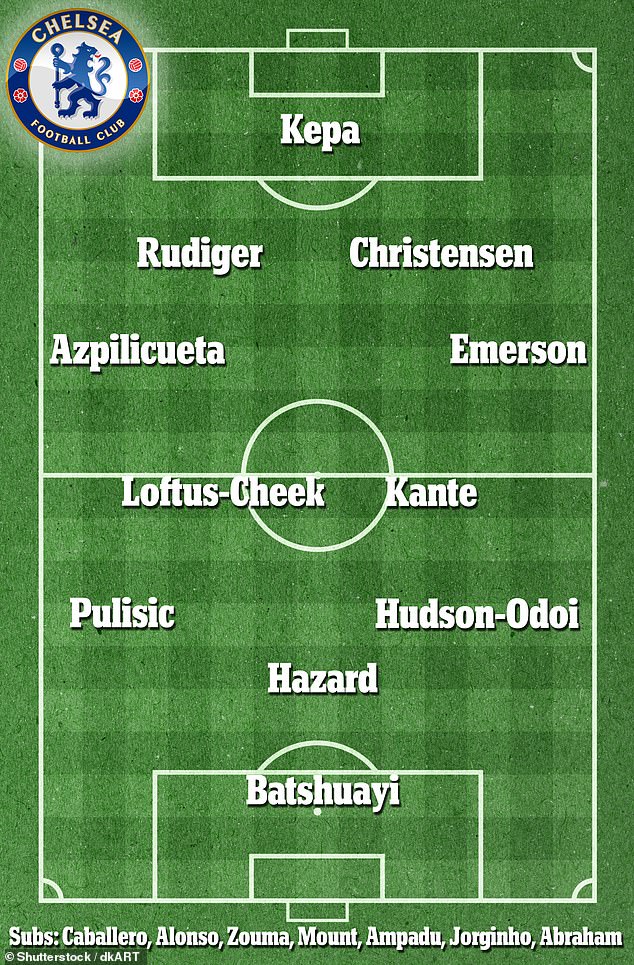
Chelsea could line up like this in 2019-20 if the two window transfer ban is held up
Hazard has been desperate to join Real Madrid but may now be left with no choice but to stay at Stamford Bridge with the Blues unable to bring in a replacement.
He now appears destined to leave on a free transfer in 2020, with no sign that a new deal is in sight.
Up front Chelsea face having to bring back at least one on-loan striker.
It looks like they may be able to make Gonzalo Higuain’s loan deal permanent, but face losing Olivier Giroud with his contract up this summer.
That could hand lifelines to much-maligned pair Alvaro Morata and Michy Batshuayi.
Atletico Madrid are likely to exercise their right to buy Morata outright, giving Batshuayi an unexpected second chance at Stamford Bridge.
Eden Hazard could be forced to stay, raising the possibility of him leaving for free in 2020
Michy Batshuayi and Alvaro Morata could be in competition for a starting role up front
Tammy Abraham has impressed on loan in the Championship at Aston Villa this season
Tammy Abraham had appeared set for a loan to Wolves in January after a successful spell at Aston Villa.
He may now find himself auditioning for that sole striker spot in Chelsea’s starting lineup between now and the end of the season.
There is a mini crisis for Chelsea in goal, with back-ups to No 1 Kepa – Willy Caballero and Rob Green – out of contract this summer.
At 37 Caballero is a spring chicken next to 39-year-old Rob Green and appears likely to earn another deal.
In defence Cesar Azpilicueta remains a mainstay. Emerson Palmieri may now earn a regular chance at left-back.
The 24-year-old has only made 16 appearances since joining 13 months ago but may present a more viable option than the declining Marcos Alonso.
Ruben Loftus-Cheek has been starved at opportunities under Maurizio Sarri this year
Callum Hudson-Odoi was desperate to join Bayern Munich but may be forced to stay
In midfield Jorginho faces an uncertain future should Maurizio Sarri leave before the end of the season, as expected.
That presents an opportunity for Ruben Loftus-Cheek, who has been starved of first-team minutes under the Italian. N’Golo Kante would return in his natural central position.
And Chelsea could go with a new-look three behind the main man Batshuayi with Hazard operating in the centre, flanked by Christian Pulisic and Callum Hudson-Odoi.
The purchase of Pulisic ahead of the summer window looks shrewder now, while it denies Hudson-Odoi the move to Bayern Munich he has so craved.
Christian Pulisic will come straight into the side when his move is made official in the summer
There is a feeling that the 18-year-old would be handed more first-team chances under a different manager.
In reserve, Ethan Ampadu will find himself higher up the pecking order but often on the bench.
A number of loan players are likely to return, even Tiemoue Bakayoko, despite preferring to stay at AC Milan. Mason Mount will have gained much from his spell at Derby this year, and Kurt Zouma will boost the numbers despite two years away.
Teenage full-back Reece James, on loan at Wigan, could be given the opportunity to stake his claim too.
Despite the ban, Chelsea still have plenty of options thanks to the wealth of players out on loan.
Mason Mount may get the chance to stake his claim after impressing with Derby this season